


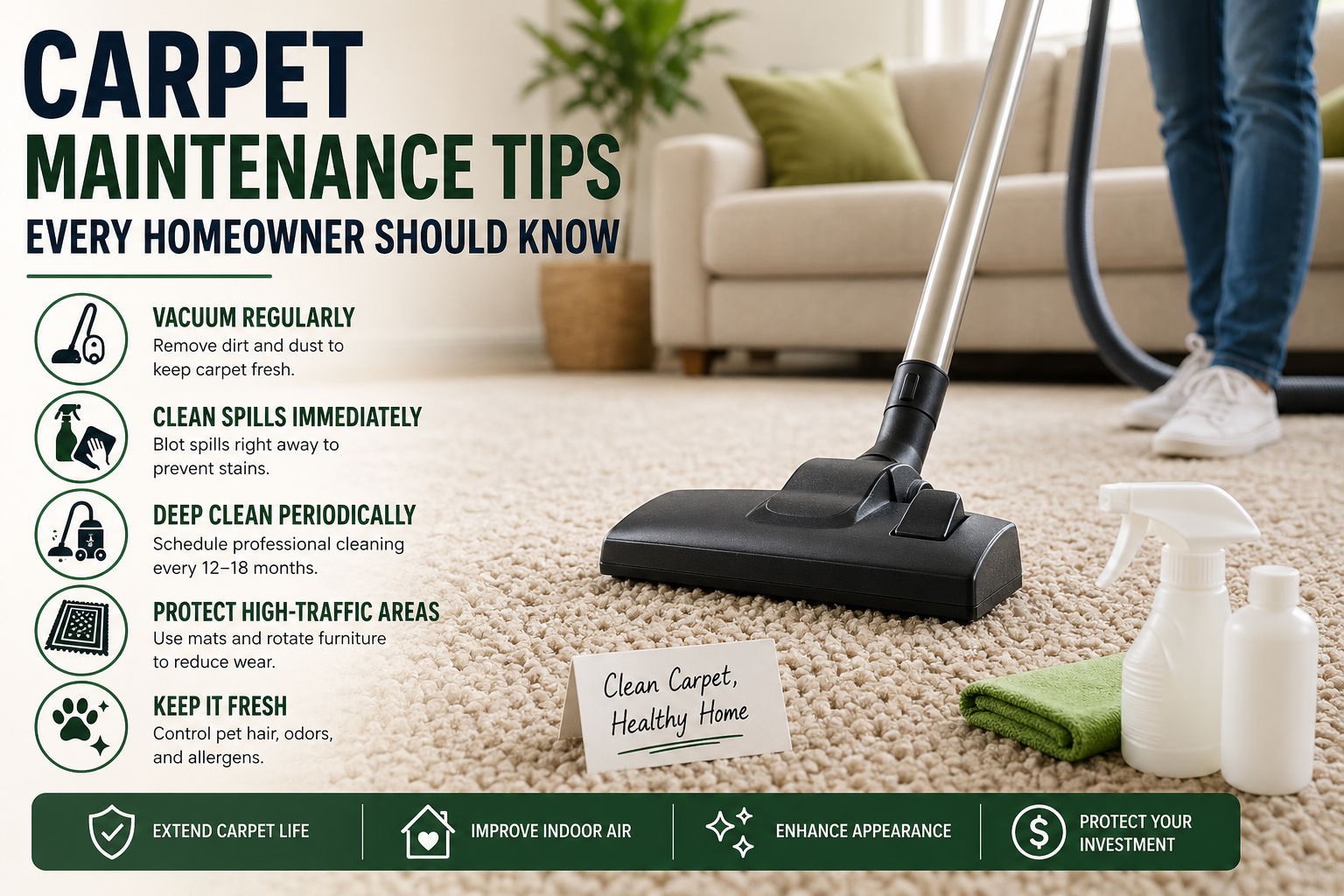
Carpet Maintenance Tips Every Homeowner Should Know
Carpet can make a home feel warmer, quieter, and more comfortable — but only when it is cared for properly. For homeowners in California, carpet maintenance is not just about vacuuming once in a while. Dust, dry weather, pets, foot traffic, sunlight, and spills can all affect how long your carpet looks fresh and feels soft.
Whether your carpet is in a bedroom, living room, hallway, home office, or family room, the right care routine can help extend its life and keep your home healthier. Many homeowners replace carpet earlier than needed simply because small cleaning habits were missed over time.
This guide covers practical carpet maintenance tips every homeowner should know — from daily care and stain removal to deep cleaning, odor control, and when to call a professional.
Why Carpet Maintenance Matters
Carpet collects more than visible dirt. It can hold dust, pollen, pet dander, food crumbs, outdoor debris, and moisture from spills. In busy California homes, especially homes with children, pets, or open windows, this buildup can happen quickly.
Regular carpet care helps maintain the look, texture, and indoor comfort of your home. It also protects your flooring investment. A well-maintained carpet can stay attractive for years, while neglected carpet may become flat, stained, or musty much sooner.
Cleaner Appearance
Routine cleaning prevents dirt from settling deep into carpet fibers.
Better Indoor Air
Removing dust and allergens helps create a fresher home environment.
Longer Carpet Life
Good maintenance reduces matting, fiber damage, and early replacement.
1. Vacuum Regularly, Especially in High-Traffic Areas
Vacuuming is the simplest and most important carpet maintenance habit. Dirt and grit act like tiny abrasive particles. When people walk over them, they can damage carpet fibers and make the surface look dull.
For most homes, vacuum high-traffic areas at least two to three times per week. Bedrooms and low-use rooms can usually be vacuumed once per week. Homes with pets, kids, or heavy foot traffic may need more frequent cleaning.
- Vacuum slowly instead of rushing over the carpet.
- Use overlapping strokes for better dust removal.
- Empty the vacuum bag or canister before it gets too full.
- Clean or replace filters regularly.
- Use the right height setting for your carpet pile.
Homeowner tip: Hallways, stairs, entry areas, and living rooms usually need more attention because they collect dirt faster than bedrooms.
2. Treat Spills Immediately
The faster you act on a spill, the better chance you have of preventing a permanent stain. Many carpet stains become difficult because the liquid sinks deeper into the padding or dries into the fibers.
Always blot, never rub. Rubbing can spread the stain and damage carpet texture. Use a clean white cloth or paper towel and press gently from the outside of the spill toward the center.
Basic Spill Cleaning Steps
- Remove any solid material first.
- Blot the liquid gently with a clean cloth.
- Apply a carpet-safe cleaner if needed.
- Blot again with clean water.
- Dry the area completely.
For wine, coffee, pet accidents, ink, or oil-based stains, avoid guessing with harsh chemicals. The wrong cleaner can set the stain permanently or discolor the carpet.
3. Use Entry Mats to Reduce Dirt
One of the easiest ways to protect carpet is to stop dirt before it reaches the carpeted area. Place strong doormats at exterior entrances, garage entries, patio doors, and high-use transitions.
California homes often deal with dry dust, sand, and outdoor particles. These can be tracked inside easily, especially in areas near gardens, driveways, patios, or beach communities.
Encourage a shoes-off habit indoors when possible. Even a simple shoe rack near the door can reduce the amount of dirt and grit pushed into carpet fibers.
4. Move Furniture Occasionally
Heavy furniture can create dents and pressure marks in carpet. Over time, these areas may stay compressed if the furniture is never moved.
Try shifting furniture slightly every few months. You can also use furniture coasters or carpet protectors under heavy pieces like sofas, beds, tables, and cabinets.
If you already have furniture dents, place an ice cube over the dent, let it melt, then gently lift the fibers with a spoon or soft brush once the area is nearly dry. Always test carefully and avoid soaking the carpet.
5. Deep Clean Carpet on a Schedule
Vacuuming removes surface dirt, but deep cleaning removes buildup trapped deeper inside the fibers. Most homeowners should schedule professional carpet cleaning every 12 to 18 months.
Homes with pets, allergies, small children, or heavy use may need deep cleaning every 6 to 12 months. Professional cleaning can refresh the texture, remove odors, and improve the overall look of carpet.
Avoid over-wetting carpet. Too much water can lead to mold, mildew, odor, or damage to the carpet backing. This is one reason professional equipment and proper drying are important.
6. Choose Carpet-Safe Cleaning Products
Not every cleaner is safe for carpet. Harsh chemicals, bleach, strong detergents, and random DIY mixtures can damage fibers or leave sticky residue that attracts more dirt.
Use pH-balanced carpet cleaners and always test a small hidden area first. If the carpet changes color, feels sticky, or looks faded after testing, do not use that product on a visible area.
Also avoid using too much cleaner. More product does not mean better cleaning. Extra residue can make carpet look dirty again faster.
7. Protect Carpet from Sun Fading
Many California homes receive strong sunlight through large windows and sliding doors. Over time, direct sunlight can fade carpet color, especially in rooms with south-facing or west-facing windows.
Use curtains, blinds, UV window film, or area rugs in sunny spaces. Rotating rugs and furniture can also help prevent uneven fading patterns.
If you are comparing different flooring options for sun-heavy rooms, you may also want to review hardwood and hard-surface choices. For example, homeowners researching hardwood flooring California can compare long-term care needs before deciding between carpet, hardwood, laminate, or vinyl plank.
8. Control Pet Hair and Odors
Pets add comfort to a home, but they also increase carpet maintenance needs. Pet hair, dander, outdoor dirt, and accidents can settle into carpet quickly.
Use a vacuum designed for pet hair and clean high-use pet areas more often. Wash pet bedding regularly so odors do not transfer back into the carpet. For accidents, use enzyme-based cleaners made specifically for pet stains.
If pet odor returns after cleaning, the issue may be deeper than the surface. The stain may have reached the carpet padding, which may require professional treatment.
9. Know When Carpet Needs Professional Help
Some carpet problems should not be handled with DIY cleaning. Call a professional if you notice recurring stains, strong odors, water damage, loose carpet, ripples, or dark traffic lanes that do not improve after vacuuming.
Professional carpet cleaners can assess whether the issue is surface-level, deep in the padding, or related to carpet age. In some cases, cleaning is enough. In other cases, repair or replacement may be more practical.
10. Compare Carpet With Other Flooring Options
Carpet is excellent for warmth, comfort, sound absorption, and bedrooms. However, some areas of the home may perform better with other flooring types.
For kitchens, bathrooms, laundry rooms, and high-moisture spaces, tile, vinyl plank, or laminate may be easier to maintain. If you are planning a larger flooring update, it helps to compare each material based on lifestyle, cleaning needs, budget, and room use.
Homeowners searching for tile installers near me or vinyl plank flooring installers near me can explore related flooring guides before choosing the right option for each room.
Best Carpet Maintenance Routine for Homeowners
Daily
Pick up crumbs, clean visible dirt, and blot spills immediately.
Weekly
Vacuum all carpeted rooms and focus extra time on high-traffic areas.
Monthly
Check for stains, furniture dents, odor, and worn traffic paths.
Yearly
Schedule professional carpet cleaning every 12–18 months.
Common Carpet Maintenance Mistakes to Avoid
- Rubbing stains instead of blotting them.
- Using too much water during cleaning.
- Skipping regular vacuuming.
- Using bleach or harsh cleaners.
- Ignoring pet accidents until they dry.
- Letting sunlight fade one area continuously.
- Waiting too long for professional cleaning.
Most carpet damage happens slowly. A little dirt, a small spill, or a skipped cleaning may not look serious at first. But over time, these small issues can shorten the life of your carpet and affect the comfort of your home.
Need Carpet or Flooring Help in Southern California?
SD Floor Center helps homeowners connect with local flooring professionals, carpet specialists, tile installers, vinyl plank installers, hardwood experts, and remodeling contractors across California.
Final Thoughts
Carpet maintenance does not need to be complicated. A consistent routine — vacuuming regularly, treating spills quickly, using safe cleaners, protecting high-traffic areas, and scheduling professional cleaning — can make a major difference in how your carpet looks and lasts.
For California homeowners, carpet care is especially important because dust, sunlight, pets, and busy indoor-outdoor living can all affect carpet performance. With the right habits, your carpet can stay soft, clean, and comfortable for years.
FAQs About Carpet Maintenance
How often should I vacuum my carpet?
High-traffic areas should be vacuumed two to three times per week. Low-traffic rooms can usually be vacuumed once per week.
How often should carpet be professionally cleaned?
Most carpets should be professionally cleaned every 12 to 18 months. Homes with pets, children, or allergies may need cleaning more often.
What is the best way to clean carpet stains?
Blot the stain immediately with a clean white cloth. Avoid rubbing. Use a carpet-safe cleaner and test it first in a hidden area.
Can sunlight damage carpet?
Yes. Direct sunlight can fade carpet over time. Use window coverings, UV film, or rugs to reduce sun exposure.
When should I replace carpet instead of cleaning it?
If carpet has permanent stains, strong odors, water damage, worn padding, or heavy matting, replacement may be more practical than repeated cleaning.
We write rarely, but only the best content.
