


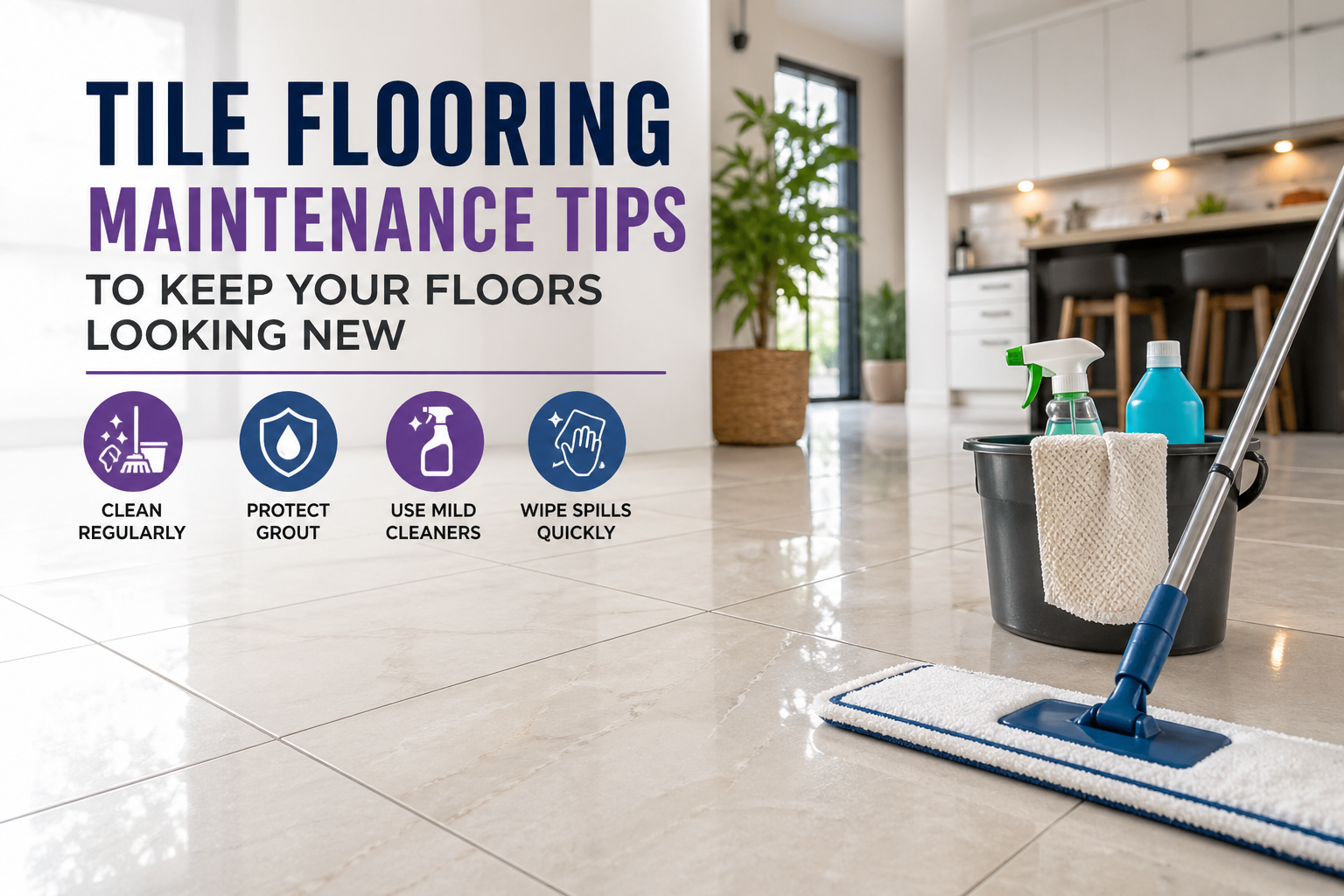
Tile flooring is one of the most durable and beautiful flooring choices for Southern California homes. It works well in kitchens, bathrooms, entryways, living rooms, laundry areas, and even outdoor spaces. But even though tile is strong, it still needs the right care routine to stay clean, fresh, and long-lasting.
Proper tile flooring maintenance is not just about mopping once in a while. It includes protecting grout, choosing the right cleaner, avoiding harsh chemicals, preventing moisture damage, and knowing when to call a professional tile flooring contractor in Southern California.
This guide will help homeowners understand how to clean tile floors properly, maintain grout, avoid common mistakes, and protect tile flooring for years.
Why Tile Flooring Maintenance Matters
Tile floors are known for strength and easy cleaning, but they are not completely maintenance-free. Over time, dirt, moisture, soap residue, hard water, and foot traffic can affect both the tile surface and grout lines.
In many homes, the tile itself stays strong, but the grout begins to discolor, crack, or absorb stains. Once grout starts breaking down, moisture can move beneath the tile and create bigger issues.
- Grout can become dark, stained, or moldy.
- Tile surfaces can lose shine due to residue buildup.
- Loose tiles may appear if moisture reaches the subfloor.
- Improper cleaners can damage natural stone tile.
- Neglected floors may need professional repair sooner.
For a deeper care resource, visit the tile flooring maintenance guide on SD Floor Center.
Daily Tile Flooring Maintenance Tips
1. Sweep or Vacuum Loose Dirt
Dust, sand, and small debris can slowly dull tile surfaces. This is especially common in entryways, kitchens, and hallways where foot traffic is higher.
Use a soft broom, microfiber dust mop, or vacuum without a harsh beater bar. Regular sweeping keeps dirt from scratching the surface and makes weekly mopping more effective.
2. Wipe Spills Quickly
Tile is usually water-resistant, but grout is more porous. Spills from coffee, juice, sauces, oil, makeup, or cleaning products can stain grout if they sit too long.
Wipe spills immediately with a soft cloth. In kitchens and bathrooms, quick cleanup is one of the easiest ways to protect tile floors.
3. Use Mats at Entry Points
Doormats reduce the amount of dirt, sand, and dust entering your home. This is useful for Southern California homes where outdoor dust can easily collect indoors.
Weekly Cleaning Routine for Tile Floors
A weekly cleaning routine helps tile floors stay fresh without damaging the surface or grout.
Use Mild Cleaner
Choose a pH-neutral tile cleaner for regular mopping. It cleans without leaving harsh residue.
Avoid Excess Water
Use a damp mop, not a soaking wet mop. Too much water can weaken grout over time.
Dry Mop First
Remove loose dust before wet cleaning to avoid muddy streaks on the floor.
Dry Wet Areas
Bathrooms and kitchens should be dried after cleaning to reduce moisture around grout.
For broader home cleaning guidance, explore the floor maintenance guide.
How to Maintain Tile Grout Properly
Grout has a major impact on how clean your tile floor looks. Even if the tile is spotless, dirty grout can make the whole floor appear old.
Clean Grout Lines Gently
Use a soft grout brush and grout-safe cleaner. Avoid metal brushes because they can damage grout and scratch tile edges.
Seal Grout Regularly
Grout sealing helps protect against stains, moisture, and mildew. Bathrooms, kitchens, laundry rooms, and outdoor tile areas may need sealing more often because they deal with more water and humidity.
Repair Cracked Grout Early
Cracked grout should not be ignored. It may allow moisture to move under the tile, which can lead to loose tiles or subfloor problems.
Seeing Cracked or Dirty Grout?
Compare local tile and stone specialists through SD Floor Center and find help for grout repair, tile replacement, sealing, and professional cleaning.
Tile Maintenance by Flooring Type
Ceramic Tile
Ceramic tile is easy to clean and works well for kitchens, bathrooms, and living spaces. Use mild cleaner and avoid abrasive scrubbers.
Porcelain Tile
Porcelain tile is dense and durable. It handles moisture well and is a strong option for high-traffic spaces. Regular sweeping and damp mopping are usually enough.
Natural Stone Tile
Natural stone such as marble, travertine, slate, and limestone needs extra care. Avoid vinegar, lemon, bleach, and acidic cleaners. Stone-safe cleaners and regular sealing are important.
Decorative Tile and Stone
Decorative tile and stone can add a premium look to kitchens, bathrooms, showers, and feature areas. For new projects or repairs, homeowners can browse decorative tile and stone installers.
Seasonal Tile Maintenance Checklist for Southern California Homes
Tile floors in Southern California may deal with dry dust, coastal moisture, outdoor traffic, and occasional rainy weather. A seasonal checklist helps keep floors protected throughout the year.
Spring
- Deep clean tile and grout after winter moisture.
- Check bathroom and kitchen grout for cracks.
- Clean entry mats and rugs.
Summer
- Sweep more often due to dust and outdoor traffic.
- Clean patio or outdoor tile areas.
- Check pool-area tile for slippery buildup.
Fall
- Inspect grout before rainy weather.
- Seal grout if water no longer beads on the surface.
- Clean kitchen tile before holiday cooking season.
Winter
- Dry wet floors quickly after rain.
- Use mats near doors to reduce moisture and dirt.
- Watch for mold or mildew in bathroom grout.
Common Tile Flooring Mistakes Homeowners Make
Using Vinegar Everywhere
Vinegar can damage natural stone and may weaken grout sealers over time.
Ignoring Grout
Dirty grout makes clean tile look old. Grout care should be part of every cleaning routine.
Using Rough Scrubbers
Steel wool and abrasive pads can scratch tile surfaces and damage grout edges.
Leaving Standing Water
Standing water can seep into grout and create long-term moisture problems.
When DIY Is Fine — And When to Call a Pro
Basic tile flooring maintenance can usually be handled at home. Sweeping, mopping, wiping spills, and light grout cleaning are simple DIY tasks.
However, professional help is recommended when the floor has deeper problems. A qualified tile flooring contractor in Southern California can inspect the floor and recommend the right solution.
- Loose or hollow-sounding tiles
- Cracked or missing grout
- Deep grout stains that do not clean easily
- Mold or mildew around tile edges
- Cracked tiles
- Uneven tile surfaces
Need Help Keeping Your Tile Floors Looking New?
SD Floor Center connects homeowners with flooring contractors, tile installers, stone specialists, and remodeling professionals across Southern California.
Recommended Tools for Tile Flooring Maintenance
You do not need complicated tools to maintain tile floors. The right basic products can make cleaning safer and more effective.
- Microfiber dust mop
- Soft broom
- pH-neutral tile cleaner
- Soft grout brush
- Microfiber towels
- Grout sealer
- Door mats and rugs
For high-traffic rooms, rugs can help protect tile and improve comfort. Browse the area rugs category for local options.
How Tile Maintenance Compares With Other Floors
Tile is easier to maintain than many flooring types, but every material has its own care needs. If your home has multiple flooring surfaces, these guides may help:
Hardwood Floors
Laminate Floors
Vinyl Plank
Final Thoughts
Tile flooring is a long-term investment, and the right care routine can keep it looking new for many years. The key is consistency. Sweep regularly, mop with the right cleaner, clean grout lines, avoid harsh chemicals, and repair small problems before they become expensive.
Whether you are maintaining existing tile or planning a new tile installation, SD Floor Center makes it easier to find local flooring resources and connect with trusted professionals.
Frequently Asked Questions
How often should tile floors be cleaned?
Tile floors should be swept daily or every few days, depending on foot traffic. Weekly mopping is recommended for most homes.
What is the best cleaner for tile flooring?
A pH-neutral tile cleaner is best for regular tile flooring maintenance. Natural stone should only be cleaned with stone-safe products.
Can I use vinegar on tile floors?
Vinegar may work on some ceramic tiles, but it should not be used on natural stone because it can damage the surface.
How often should grout be sealed?
Most grout should be sealed every 6 to 12 months, especially in bathrooms, kitchens, laundry rooms, and outdoor tile areas.
When should I call a tile flooring contractor?
Call a contractor if you notice cracked tiles, loose tiles, deep grout stains, missing grout, mold, or uneven flooring.
